Selected Projects
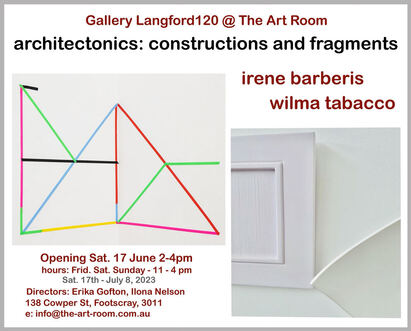
architectonics: constructions and fragments
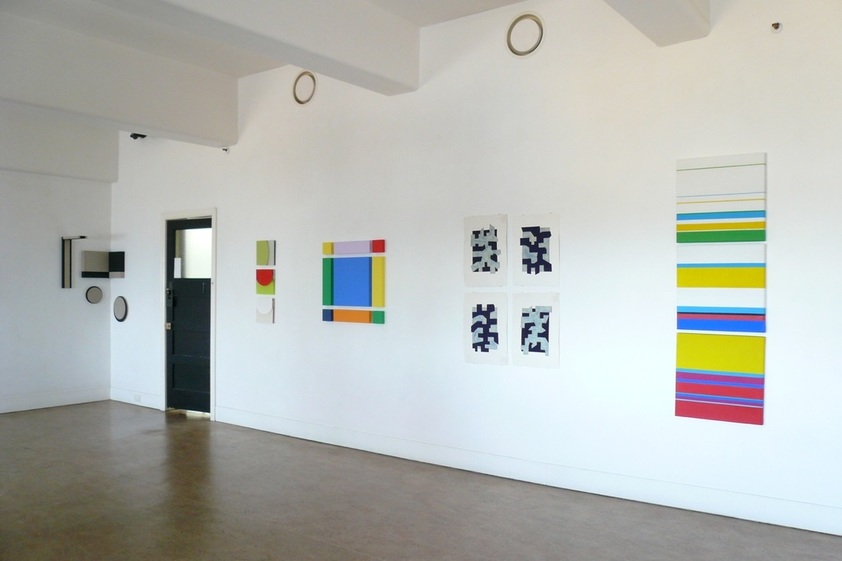
For this exhibition I have installed some of my Wall Feature works made in 2007. These were originally shown in their entirety in Room: A Series of Schemes – Scheme 3 Living Room at the Counihan Gallery – 23 November to 16 December 2007, one of five collaborations undertaken with Liliana Barbieri, Sarina Lirosi, Susan Knight and Trevor Mien, each of us making works that responded to various domestic settings and exhibited in a variety of public venues. Irene Barberis’ idea to use her highly coloured tapes as a specific site installation in The Art Room Gallery meant I could again display my monochromatic architectural objects to create a perfect symbiosis between colour and form. In the exhibition catalogue ‘Room: A Series of Schemes’ Fiona Capp wrote: ‘Wilma Tabacco’s plaster coated objects – a cherub on an oval dish, a palette and scouring pads, fruit-shaped plates mounted on wood – tap into…funerary mood. Their plaster shrouding brings to mind objects and furniture covered with white sheets in a living room where the inhabitants have gone away. They are also reminiscent of the decorative aspects of the old-fashioned parlour with its plaster cornices, scroll-work and rosettes which, it is worth remembering covered the joins between walls and around light-fittings and were thus, a form of disguise as well as embellishment. This mood of formality and emotional restraint is felt in the way the plaster objects purify the gaudiness of normal living room objects, eliminating differences and exposing shape…With repeated sanding, she was able to hid the process involved in applying the plaster and create an immaculate, almost ethereal appearance. Wilma Tabacco July 2023 |
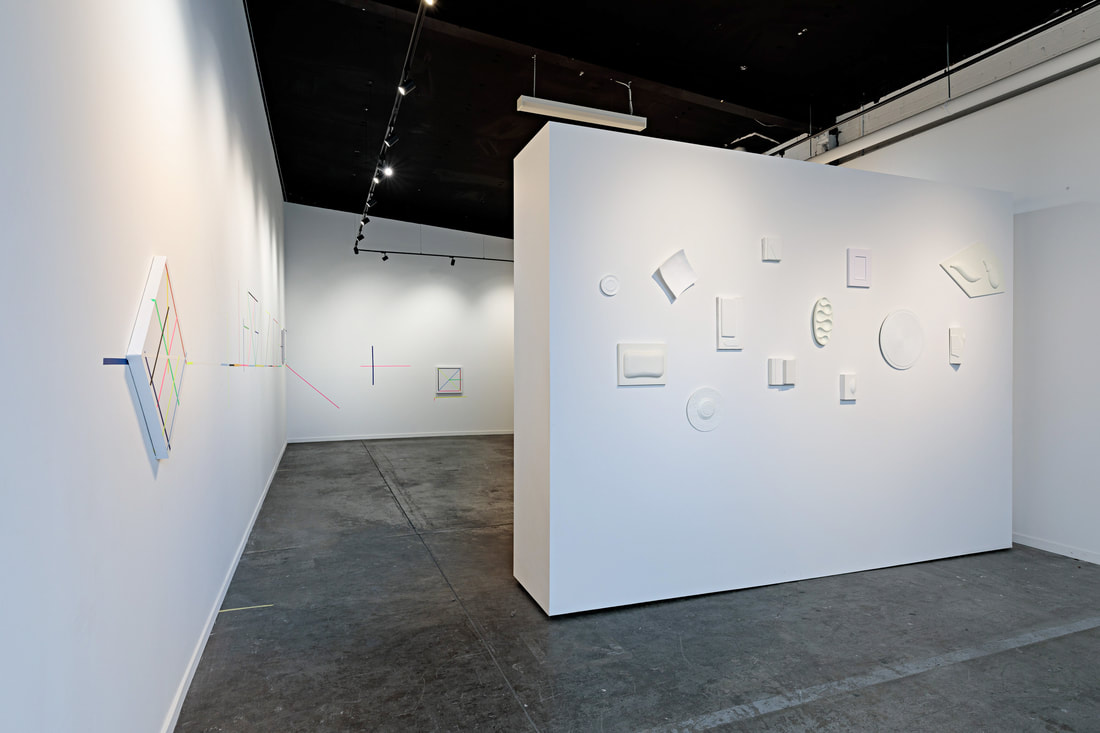
Installation 'architectonics: constructions and fragments'.
Left: Irene Barberis, Wall Drawing Structure Series in eight colors: secret geometries, 1973 - 2023. Right: Wilma Tabacco, Wall Features, 2007, wood, paper, fabric gesso, varied dimensions. 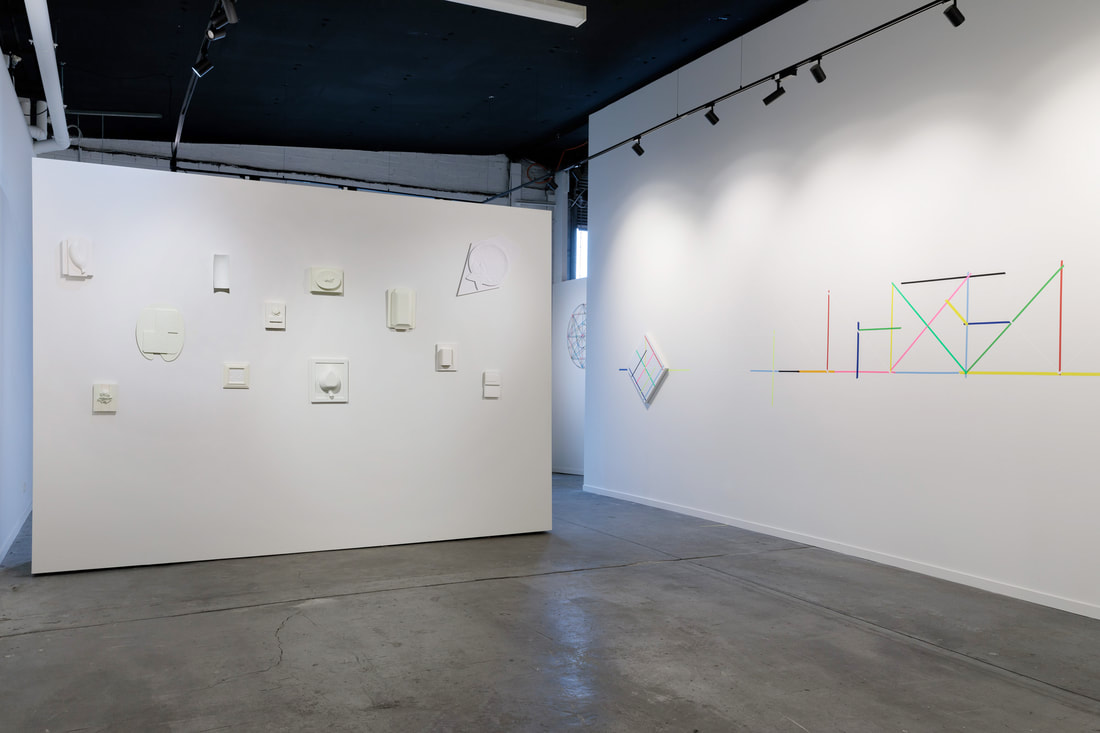
Installation 'architectonics: constructions and fragments'.
Left: Wilma Tabacco, Wall Features, 2007, wood, paper, fabric gesso, varied dimensions. Right Irene Barberis, Wall Drawing Structure Series in eight colors: secret geometries, 1973 - 2023. |
Prima Donna Podcast
|
Prima Donna Podcasts is a series of sonic portraits of Australian artists. Composer Nat Grant captures interviews with practitioners from all disciplines. The portraits comprise interview recordings collaged with Nat’s original compositions: telling these artists’ stories in their own words. They are both oral history and sonic artwork.
Lella Cariddi, initiator and super supporter of so many ‘multi-cultural’ projects, in particular those involving Italo-Australian women artists, recommended me to Nat. My personal storey – or at least some parts of it – I have happily shared with Nat on this recording. Without such support many of the stories recorded in this series of podcasts may have remained untold. I extend my thanks to both Lella and Nat for their generosity and devotion in providing a platform for those of us who speak quietly.
You can listen to more stories on: primadonnapodcast.com
|
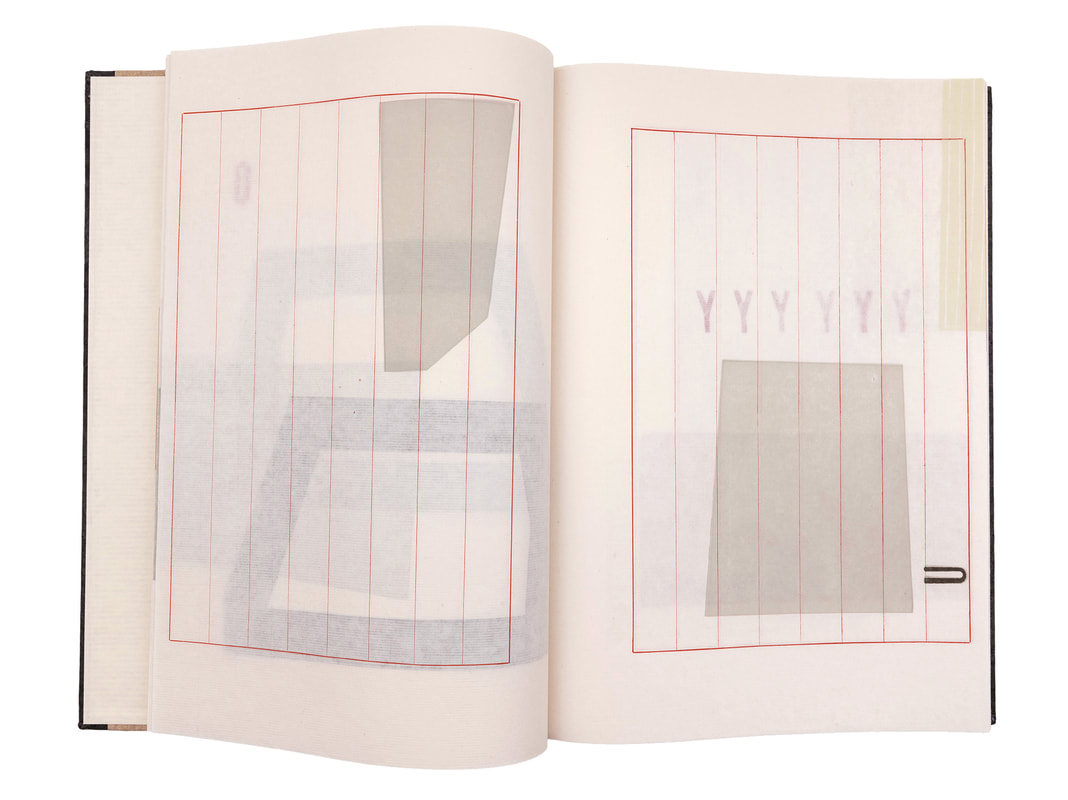
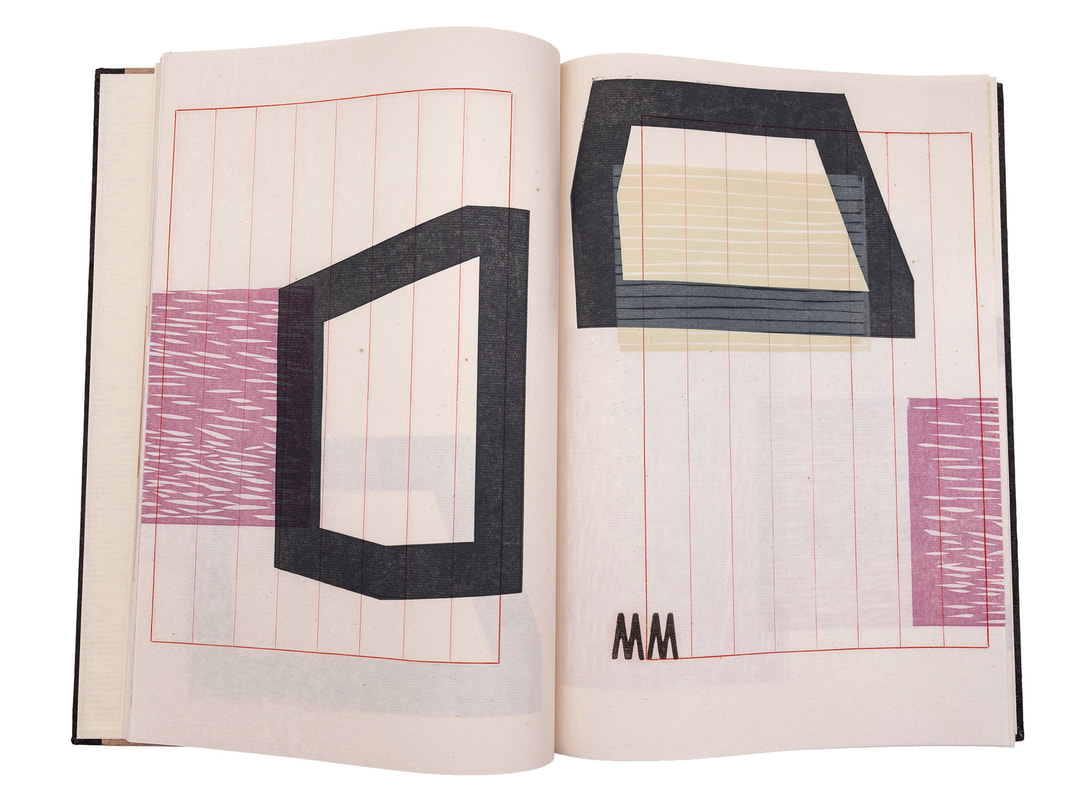
Verto; turning the plough, 2021Collaboration with Jan Davis VERTO; turning the plough pictures the passage of time; the slow decay and disappearance of the present as we know it, concurrently with the discovery of traces of the distant past.
Davis’ horticultural view of gardening as a seasonal inscription on the surface of the earth, and her belief that the form of an artist’s book is directed by its concept are brought together with Tabacco’s deep interest in Roman and other lost civilization and her abstract renditions of archaeological sites and the mapping of land usage. To move through Verto is to move through time. As with the transit of the plough, artefacts of the past are revealed, while those of the present disappear. |
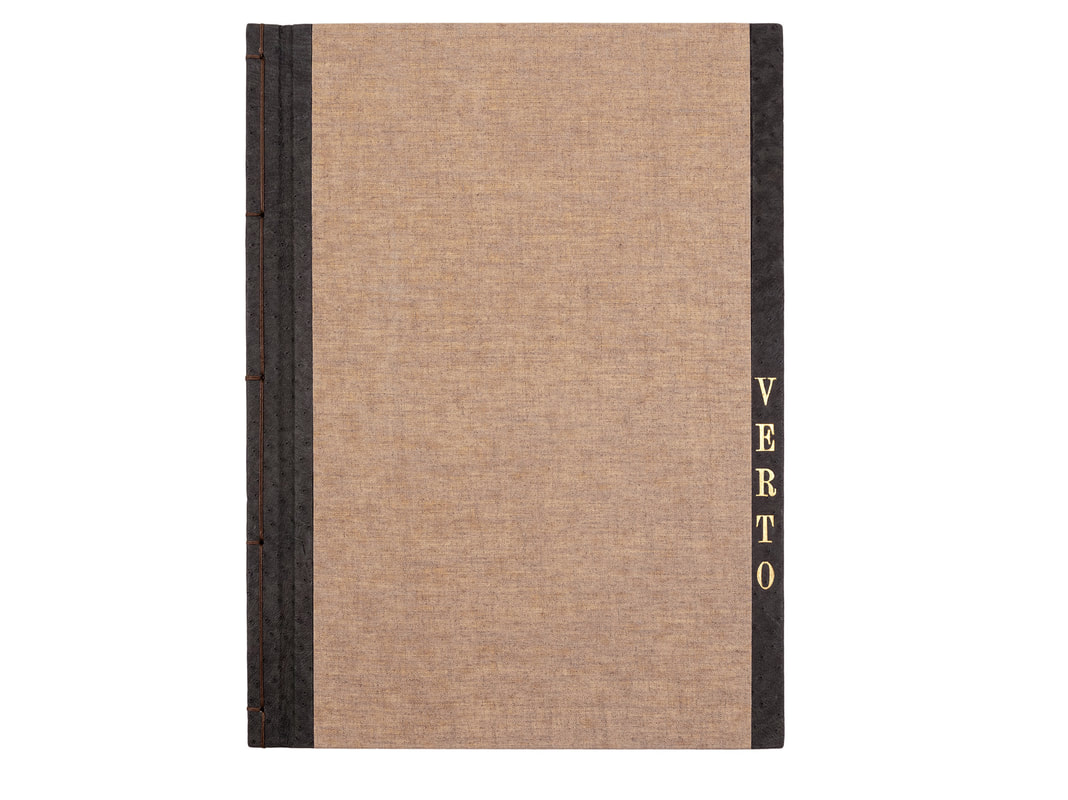
A unique, 41-page handmade book, lino and woodcut, ink stamping, embossing on lined rice paper, 30 x 22 x 1 cm
|
|
PARALLEL
|
Geometries
|
|
The Australian - Arts Review
Bronwyn Watson, January 24, 2020
For more than three years, from 1938 to 1941, Hellzapoppin was the longest running Broadway musical. The show was a crazy mix of high-energy music, improvised dance and topical slapstick. It irreverently lampooned world leaders.
The opening scene, for instance, featured Adolf Hitler speaking in a Yiddish accent, Franklin Roosevelt babbling incomprehensibly and Benito Mussolini in blackface. It also had a circus atmosphere with clowns, dwarfs, magicians and trained pigeons. Chorus girls left the stage to dance with audience members or sit in their laps. The show was so popular that there were several sequels, including a 1941 movie that featured some of the most accomplished Lindy Hop dance scenes of the swing era.
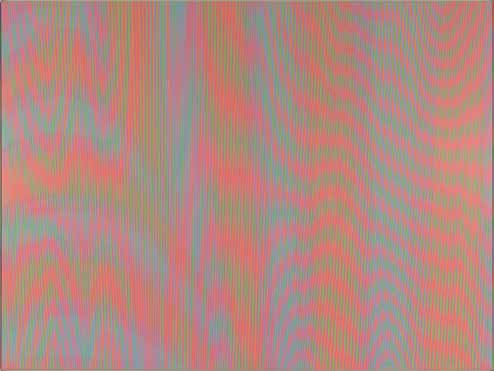
This musical is the influence for Wilma Tabacco’s 2004 painting Hellza Poppin, which is on display at Brisbane’s Queensland Art Gallery. At the gallery, curatorial manager of Australian art Peter McKay and I stand before Tabacco’s painting in which she has managed
to channel the energy of the Broadway spectacular into a mesmerising optical effect using fluctuating pink, yellow and blue stripes.
Tabacco is known for pursuing a lively abstract style, says McKay. “Unlike many op painters, she paints with a rich, almost glowing, traditional oil medium instead of fast-drying, flat-finish synthetic paints,” he says. “This makes the tightly spaced, thin vertical stripes of Hellza Poppin intensely luminous, heightening and enlivening the complex and rhythmic moire effect that she constructs.”
Tabacco, who was born in the province of L’Aquila in central Italy, came to Australia as a child. She is now based in Melbourne. Her work reflects her Italian heritage and her love of Western archaeology and history. McKay says Tabacco is a very accomplished artist who “we should all know a lot better”.
“Hellza Poppin is a great accomplishment visually; it is incredibly rich. It is a gift from dealer Bill Nuttall’s own collection. It is wonderful when dealers gift things they have accumulated over the years because they have a very good eye, so we are very grateful for that.”
McKay says one of the wonderful things about this work is that it is enduring. “I think there is a purity to it. There is a meditative aspect, even if that is a high-energy meditation because you really do focus in. There is a strong strength of engagement. You can engage in a very pure, pared-back level where you just think about your eyes and your body.
“It is almost like a dance, and I think a dance is incredibly therapeutic, and I think Hellza Poppin, with its energy, works on the body and the mind and stirs the senses.”
Wilma Tabacco, Hellza Poppin (2004). Queensland Art Gallery and Gallery of Modern Art. Gift of William Nuttall and Annette Reeves through the Queensland Art Gallery Foundation, 2008. Donated through the Australian government’s Cultural Gifts Program. On display in the exhibition Geometries, Queensland Art Gallery, Brisbane, until February 2.
Bronwyn Watson, January 24, 2020
For more than three years, from 1938 to 1941, Hellzapoppin was the longest running Broadway musical. The show was a crazy mix of high-energy music, improvised dance and topical slapstick. It irreverently lampooned world leaders.
The opening scene, for instance, featured Adolf Hitler speaking in a Yiddish accent, Franklin Roosevelt babbling incomprehensibly and Benito Mussolini in blackface. It also had a circus atmosphere with clowns, dwarfs, magicians and trained pigeons. Chorus girls left the stage to dance with audience members or sit in their laps. The show was so popular that there were several sequels, including a 1941 movie that featured some of the most accomplished Lindy Hop dance scenes of the swing era.
This musical is the influence for Wilma Tabacco’s 2004 painting Hellza Poppin, which is on display at Brisbane’s Queensland Art Gallery. At the gallery, curatorial manager of Australian art Peter McKay and I stand before Tabacco’s painting in which she has managed
to channel the energy of the Broadway spectacular into a mesmerising optical effect using fluctuating pink, yellow and blue stripes.
Tabacco is known for pursuing a lively abstract style, says McKay. “Unlike many op painters, she paints with a rich, almost glowing, traditional oil medium instead of fast-drying, flat-finish synthetic paints,” he says. “This makes the tightly spaced, thin vertical stripes of Hellza Poppin intensely luminous, heightening and enlivening the complex and rhythmic moire effect that she constructs.”
Tabacco, who was born in the province of L’Aquila in central Italy, came to Australia as a child. She is now based in Melbourne. Her work reflects her Italian heritage and her love of Western archaeology and history. McKay says Tabacco is a very accomplished artist who “we should all know a lot better”.
“Hellza Poppin is a great accomplishment visually; it is incredibly rich. It is a gift from dealer Bill Nuttall’s own collection. It is wonderful when dealers gift things they have accumulated over the years because they have a very good eye, so we are very grateful for that.”
McKay says one of the wonderful things about this work is that it is enduring. “I think there is a purity to it. There is a meditative aspect, even if that is a high-energy meditation because you really do focus in. There is a strong strength of engagement. You can engage in a very pure, pared-back level where you just think about your eyes and your body.
“It is almost like a dance, and I think a dance is incredibly therapeutic, and I think Hellza Poppin, with its energy, works on the body and the mind and stirs the senses.”
Wilma Tabacco, Hellza Poppin (2004). Queensland Art Gallery and Gallery of Modern Art. Gift of William Nuttall and Annette Reeves through the Queensland Art Gallery Foundation, 2008. Donated through the Australian government’s Cultural Gifts Program. On display in the exhibition Geometries, Queensland Art Gallery, Brisbane, until February 2.
|
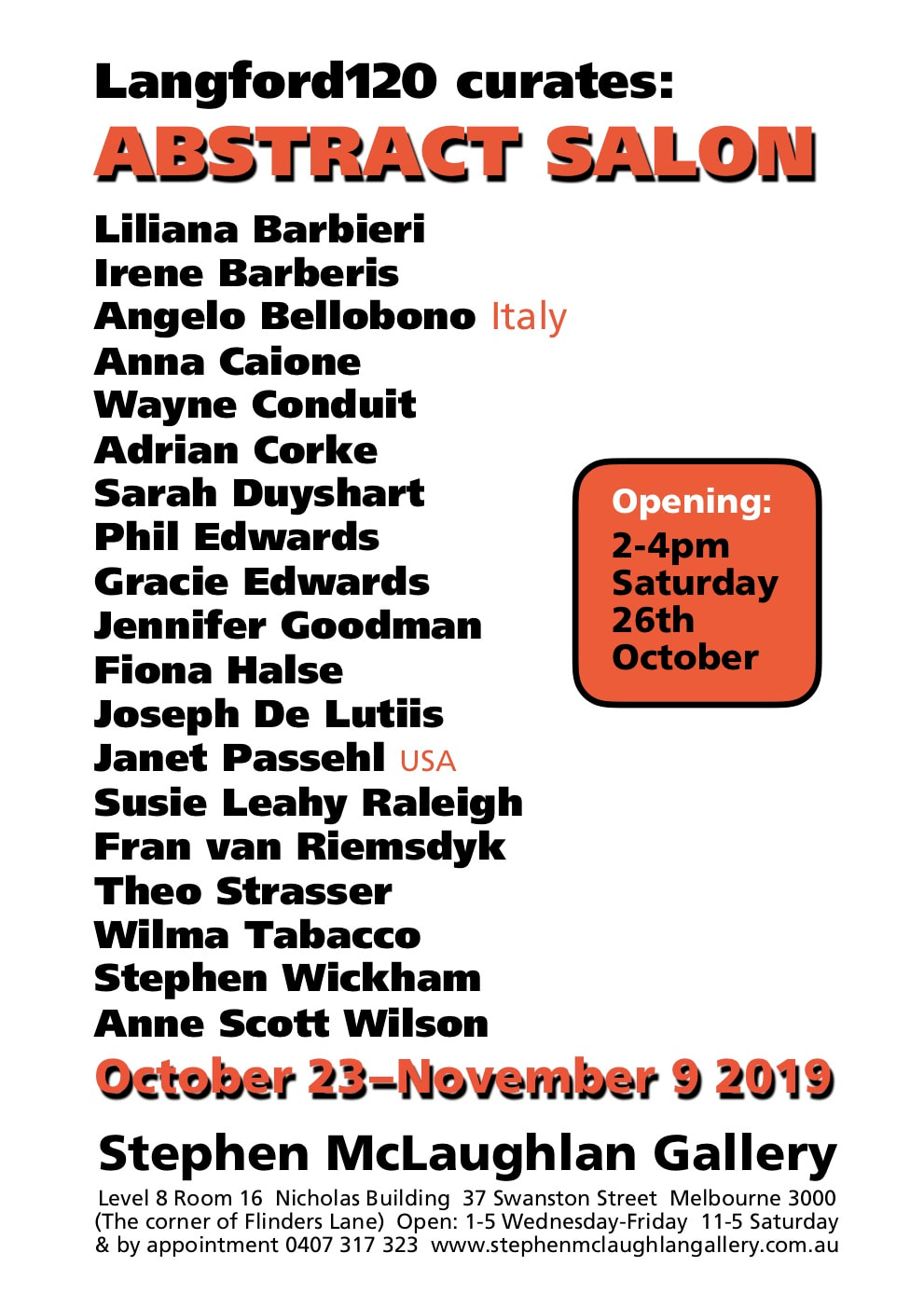
ABSTRACT SALON
|
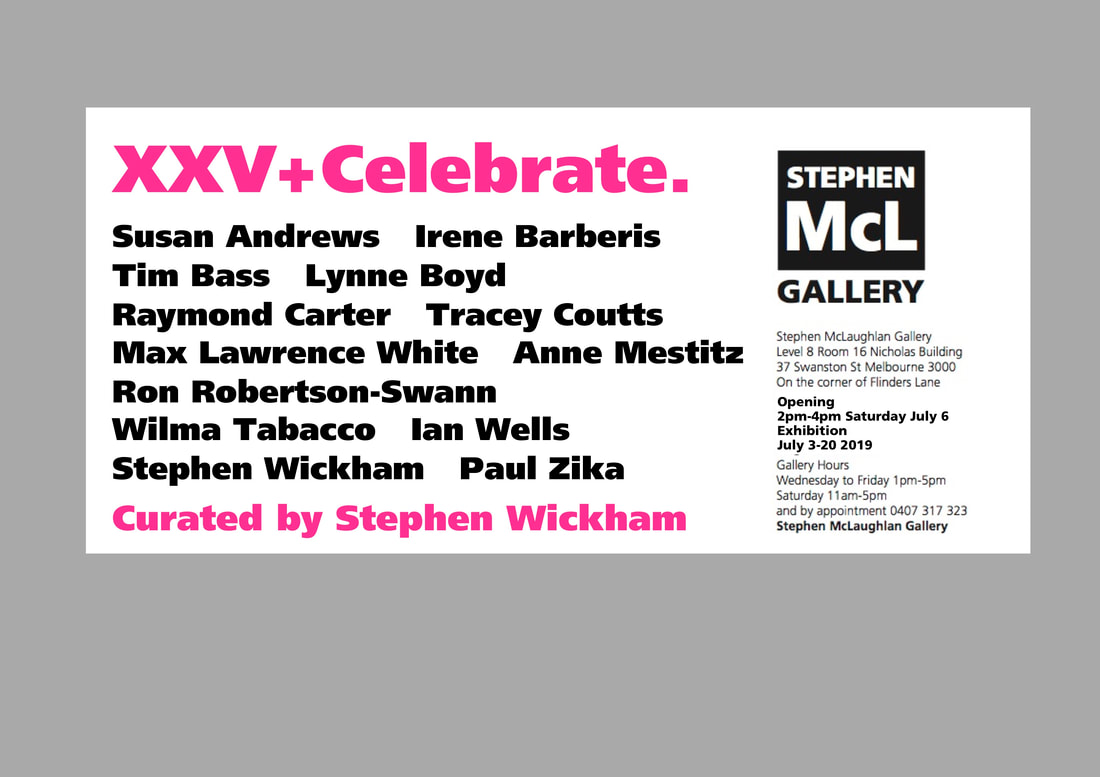
XXV+
|
|
RECIPROCO/reciprocal
Collaboration between Italo Australian and Italian artists. March 2019
Wilma Tabacco - Essay, April 2019 >> DOWNLOAD ESSAY
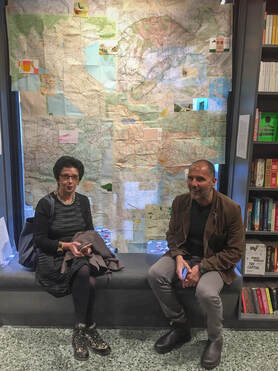
Photo: Saluti dai Paesi Fantasma, 2019
Wilma Tabacco & Angelo Bellobono |
RECIPROCO/reciprocal brings together five contemporary Australian artists of Italian origin and five contemporary artists from Italy, in order to collaborate in the making of new work exploring the nuanced narratives that describe both the chronicles of century-old Italian migration to Australia and those that have signposted the millennial evolution of italianity.
Through a collaborative process the artists have been encouraged to research and articulate aspects of the living tissue that connects one culture to the other, and we anticipate that the five collaborative outcomes will both challenge and celebrate the determining role that cultural context plays in the formation of an artist’s unique sensibility.
The co-curators Domenico de Clario (Australia) and Laura Cionci (Italy) have collaborated on a single outcome, and they have invited Eugene Carchesio (AUS) to work with Alessandro Cannistra’ (ITA); Angela Cavalieri (AUS) with Luana Perilli (ITA); Damiano Bertoli (AUS) with Rocco Dubbini (ITA) and Wilma Tabacco (AUS) with Italian artist Angelo Bellobono.
The resulting reciproco/RECIPROCAL multiplatform manifestations will be performed, installed, showcased, discussed and screened in each of five iconic socio-cultural venues, located in the inner-Melbourne suburb of Carlton.
These are CoAsIt/Museo Italiano (Cavalieri and Perilli); La Mama Theatre (Bertoli and Dubbini); Brunetti’s Café (Carchesio and Cannistra’); Readings Bookshop (Tabacco and Bellobono) and the Melbourne General Cemetery (de Clario and Cionci).
Chaos and Order, 120 years of collecting at RMIT
RMIT Gallery
Date: 13 APR 2018 - 9 JUN 2018
Embracing the contradictions inherent in public art collections and exploring the uses to which they are put.
Chaos & Order celebrates over 80 Australian and international artists in an ambitious survey of the RMIT Art Collection.
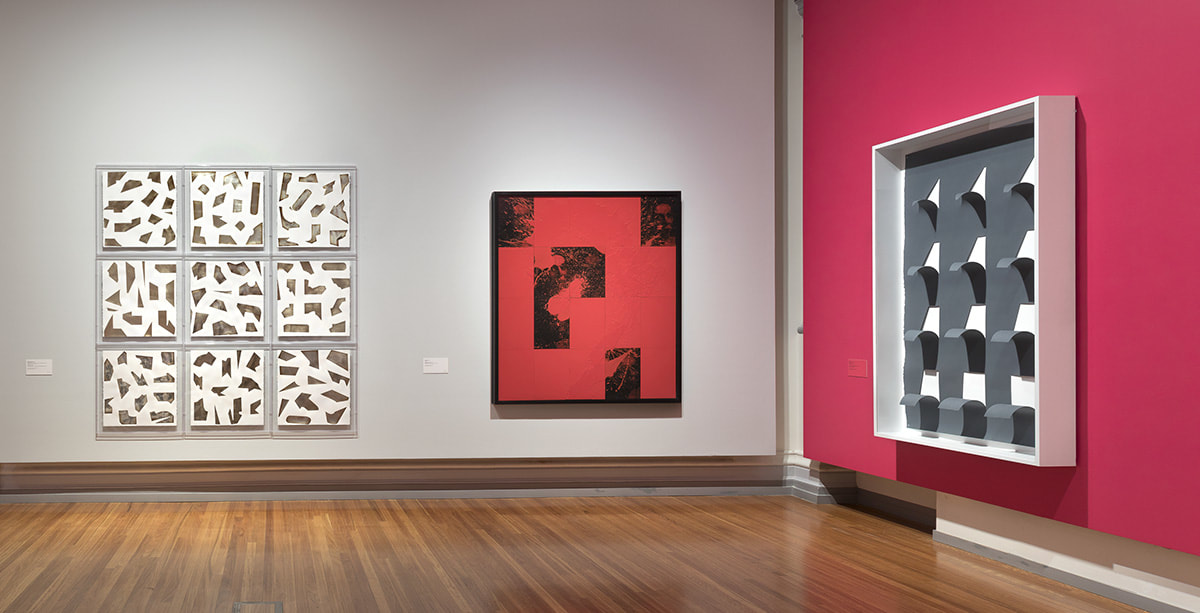
LEFT: Airborne. 1-9, 2008, gold leaf and pigment on paper. 9 panels 60 x 75 cm each.
MIDDLE: Lindy Lee
RIGHT: Robert Jacks
MIDDLE: Lindy Lee
RIGHT: Robert Jacks
Curator: Jon Buckingham
Curatorial assistants [RMIT MA Arts Management]: Ellie Collins, Adelaide Gandrille, Marybel Schwartz, Valerie Sim, Sophie Weston
Artists including Tate Adams, Howard Arkley, Khadim Ali, Peter Booth, Polly Borland, Godwin Bradbeer, Rupert Bunny, Penny Byrne, Maria Fernanda Cardoso, Peter Clarke, Michael Cook, Len Crawford, Daniel Crooks, Craig Easton, Peter Ellis, Neil Emmerson, Juan Ford, Hayden Fowler, Len French, Sally Gabori, Bill Henson, Petr Herel, Clare Humphries, Robert Hunter, Robert Jacks, Sam Jinks, George Johnson, Roger Kemp, Inge King, Grahame King, Juz Kitson, Grace Lillian Lee, Helen Maudsley, Nick Mourtzakis, Trevor Nickolls, Jill Orr, Polixeni Papapetrou, Susan Philipsz, Anthony Pryor, Reko Rennie, Yhonnie Scarce, Greg Semu, Jan Senbergs, Christian Thompson, Kawita Vatanajyankur, Ah Xian.
Curatorial assistants [RMIT MA Arts Management]: Ellie Collins, Adelaide Gandrille, Marybel Schwartz, Valerie Sim, Sophie Weston
Artists including Tate Adams, Howard Arkley, Khadim Ali, Peter Booth, Polly Borland, Godwin Bradbeer, Rupert Bunny, Penny Byrne, Maria Fernanda Cardoso, Peter Clarke, Michael Cook, Len Crawford, Daniel Crooks, Craig Easton, Peter Ellis, Neil Emmerson, Juan Ford, Hayden Fowler, Len French, Sally Gabori, Bill Henson, Petr Herel, Clare Humphries, Robert Hunter, Robert Jacks, Sam Jinks, George Johnson, Roger Kemp, Inge King, Grahame King, Juz Kitson, Grace Lillian Lee, Helen Maudsley, Nick Mourtzakis, Trevor Nickolls, Jill Orr, Polixeni Papapetrou, Susan Philipsz, Anthony Pryor, Reko Rennie, Yhonnie Scarce, Greg Semu, Jan Senbergs, Christian Thompson, Kawita Vatanajyankur, Ah Xian.
Abstraction TwentyEighteen
|
A B S T R A C T I O N A M P L I F I E D ABSTRACTION TWENTYEIGHTEEN is an initiative showcasing Abstract / Non-Objective art: 1 exhibition; 125 artists; 5 venues. Each of the Melbourne exhibition spaces has selected work that demonstrates its particular curatorial practice and aesthetic, with artists from around Australia working in a variety of materials and formats. Such diversity reflects the range of contemporary interests in Abstract / Non-Objective art. Practitioners with decades of experience and recent graduates celebrating together its innovative vitality, its freshness and longevity. In 1968, the National Gallery of Victoria opened its new St Kilda Road home. A major architectural and cultural emblem to highlight the maturity and strength of the nation’s burgeoning artistic ambition. THE FIELD exhibition of contemporary Australian abstraction affirmed our aspirations for an international context. It was a significant choice for the opening of this new cultural institution. The built form of the NGV could be considered ‘modernist sombre’ while THE FIELD itself was ‘energetic excess’. Restraint meets exuberance. A magnificent balance. In 2018, the NGV celebrates 50 years in St Kilda Road with THE FIELD REVISITED. More than a restaging of the breakout exhibition; it is a retelling of a great moment in a long story. ABSTRACTION TWENTYEIGHTEEN is a complementarity to THE FIELD REVISITED, and its precursor. The works in our suite of exhibitions reflect on a deeper history than just post/modern moments and sensibilities. They reveal influences and derivations, progressions and grand re-examinations of artistic cul-de-sacs. All manner of aesthetic polemics and political postures are reified and re-contextualised to make and mark works that advancethe action beyond novelty of the new. Stephen Wickham langford120.com.au stephenmclaughlangallery.com.au fivewalls.com.au jahm.com.au deakin.edu.au/art-collection |
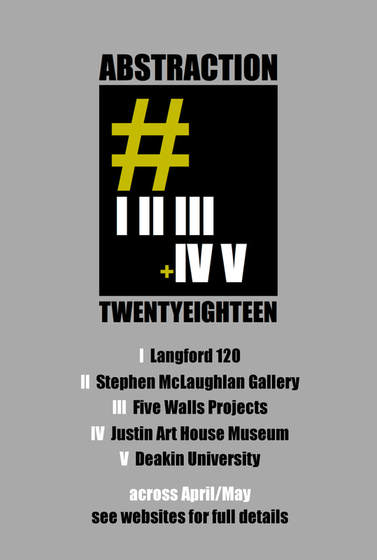
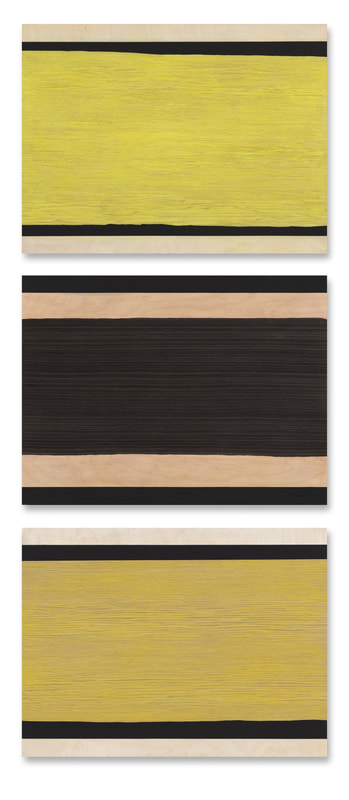
Stephen McLaughlan Gallery - April 25 – May 26, 2018
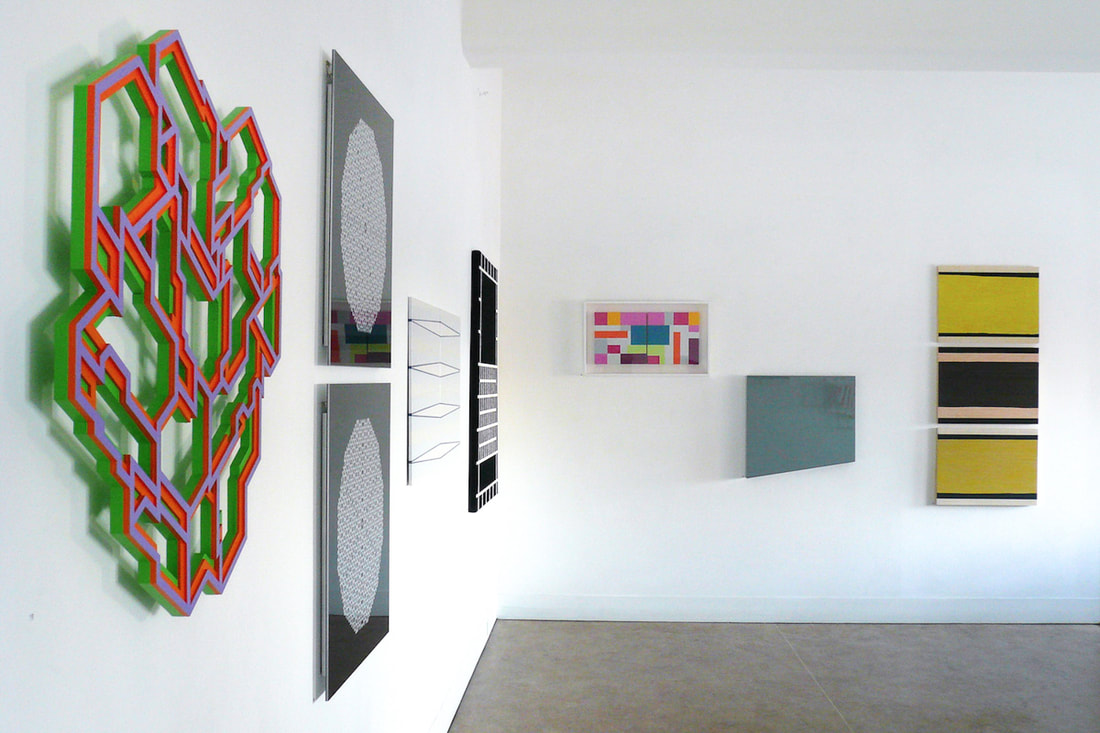
Installation image
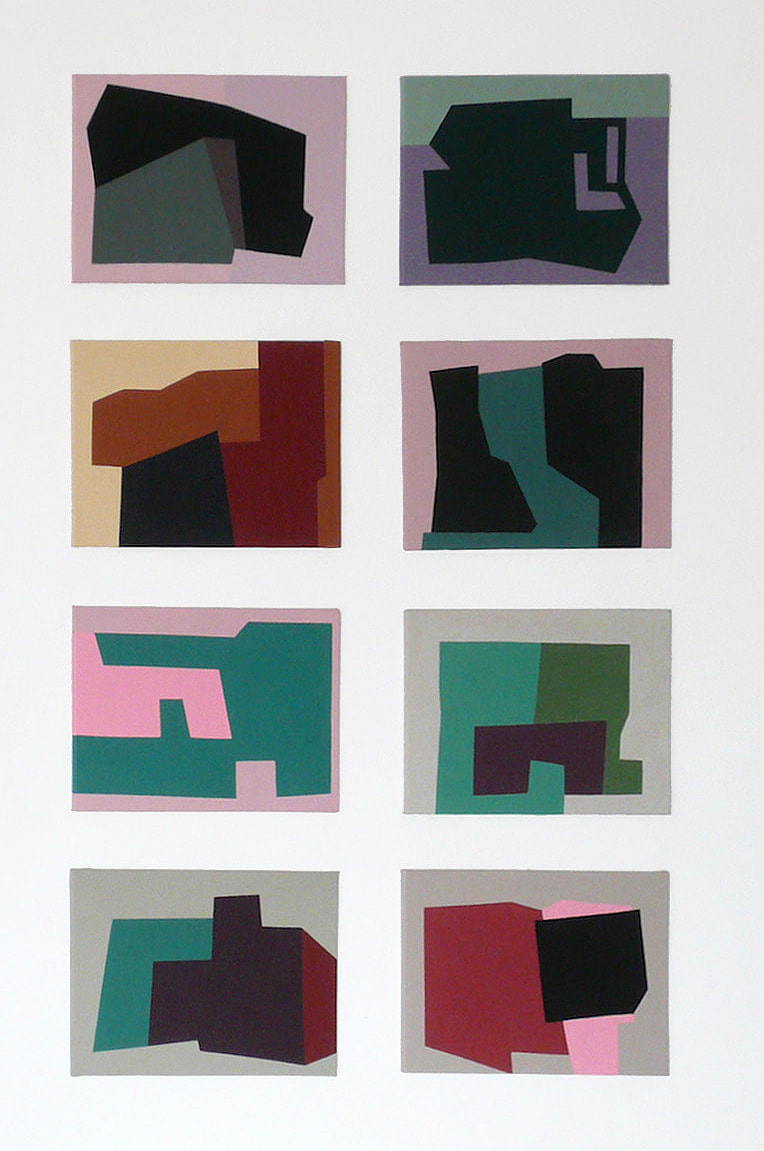
Strata 1, 2, 3, 2017 acrylic and mixed media on panel 45 x 60 cm |
|
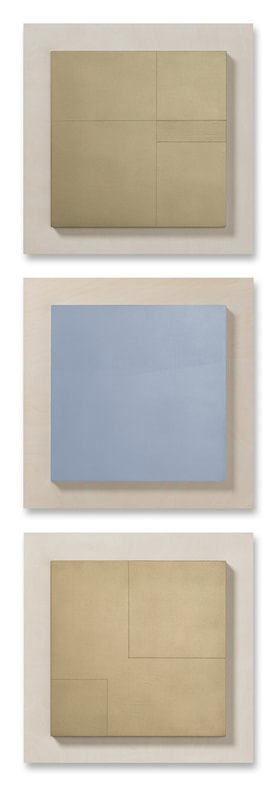
Langford120, April 21 – May 20, 2018

Installation image
Bronze Construction 1, 2013, acrylic on panel, 40 x 40 cm Blue Construction, 2013, acrylic on panel, 40 x 40 cm Bronze Construction 2, 2013, acrylic on panel, 40 x 40 cm |
|
THE VOID. VISIBLE.
|
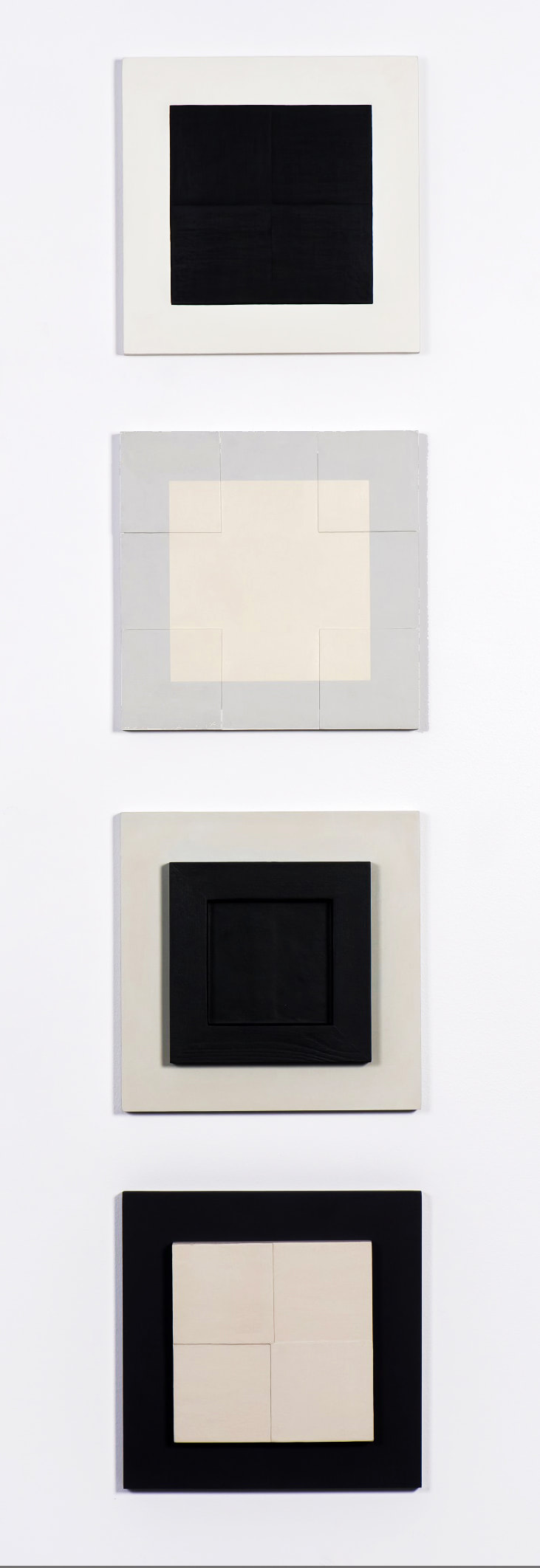
Wilma Tabacco Construction, 2014 4 x mixed media on wood panel, 30 x 30 cm |
|
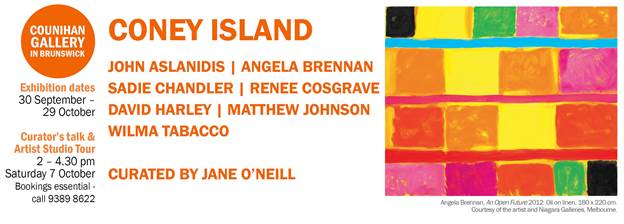
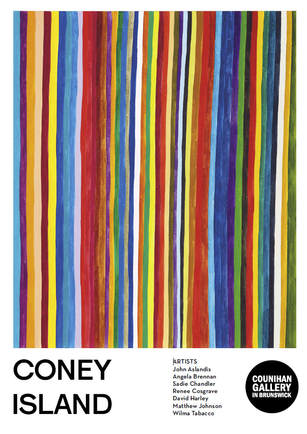
Coney Island
|
|
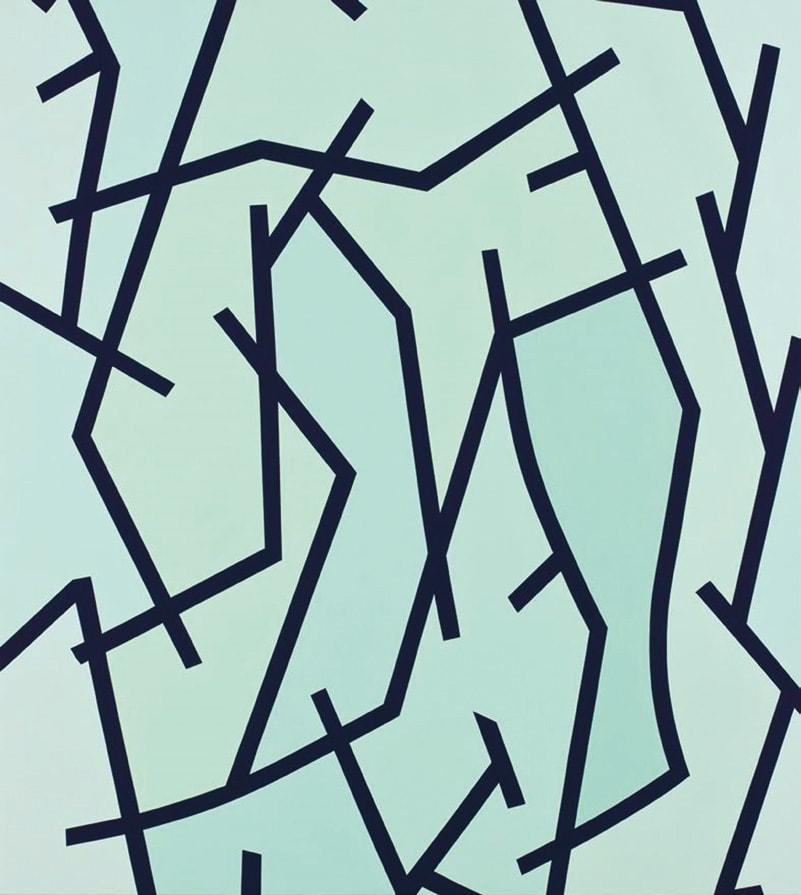
Flights of fantasy, 2008, Oil on linen, 152 x 137cm. Wilma Tabacco
|
|
CONEY ISLAND - Catalogue Essay extract:
Wilma Tabacco’s capacity for flawless hard-edge painting has been honed in a practice that spans thirty years. In the studio, smaller studies for works consist of cardboard components, that are shuffled into different configurations. The painted line surfaces differently in her works: at times in fine vertical vibrations, at others in highly pronounced block form. Dan Rule observes how, “Tabacco’s painted surfaces aren’t nearly as flat as their first read. With proximity, their patina and the play of the brush become far more complex.”4 Both Sesame and Hatchepsut are loosely drawn from the aerial view of archaeological sites. The scale of the works prompts figurative allusions and the artist freely asserts that many of her works are based on observations harnessed from reality.
Wilma Tabacco’s capacity for flawless hard-edge painting has been honed in a practice that spans thirty years. In the studio, smaller studies for works consist of cardboard components, that are shuffled into different configurations. The painted line surfaces differently in her works: at times in fine vertical vibrations, at others in highly pronounced block form. Dan Rule observes how, “Tabacco’s painted surfaces aren’t nearly as flat as their first read. With proximity, their patina and the play of the brush become far more complex.”4 Both Sesame and Hatchepsut are loosely drawn from the aerial view of archaeological sites. The scale of the works prompts figurative allusions and the artist freely asserts that many of her works are based on observations harnessed from reality.
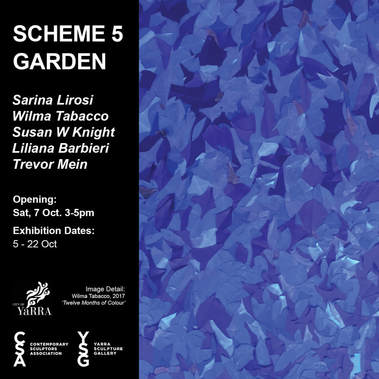
SCHEME 5 GARDEN
|
|
Sailing into History |
|
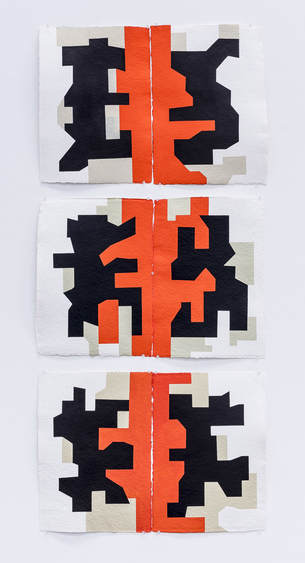
Four Drawings Barberis, Bradbeer, Southall and Tabacco Langford120, Melbourne 11 February - 12 March 2017 [ EXHIBITION LINK ] 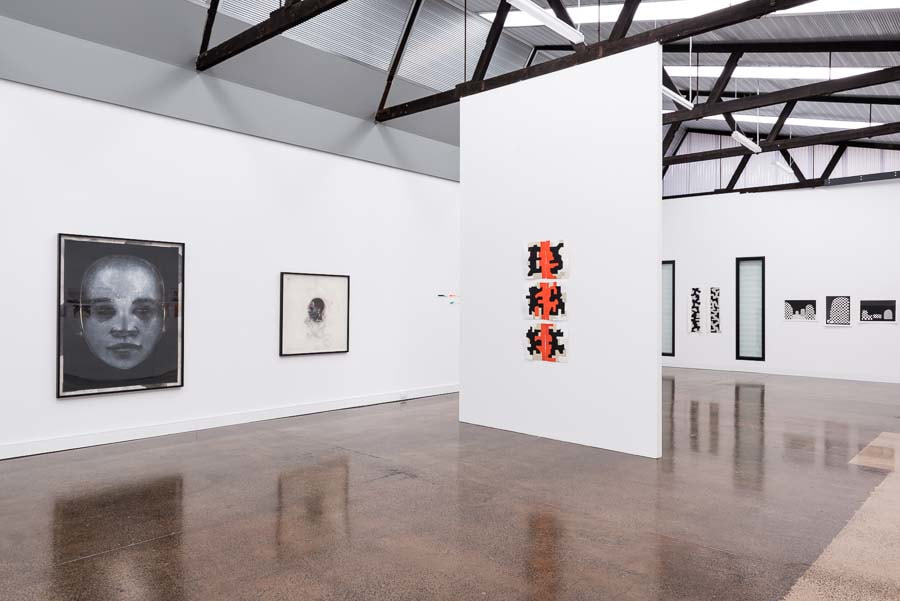
|
|
|
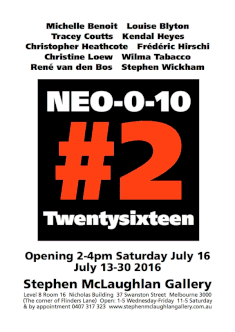
NEO-0-10 #2, 2016Stephen McLaughlan Gallery, Melbourne [ EXHIBITION LINK ] Michelle Benoit, Louise Blyton, Tracey Couttes, Kendell Heyes Christopher Heathcote, Frédéric Hirschi, Christine Loew Wilma Tabacco, Rene van den Bos, Stephen Wickham |
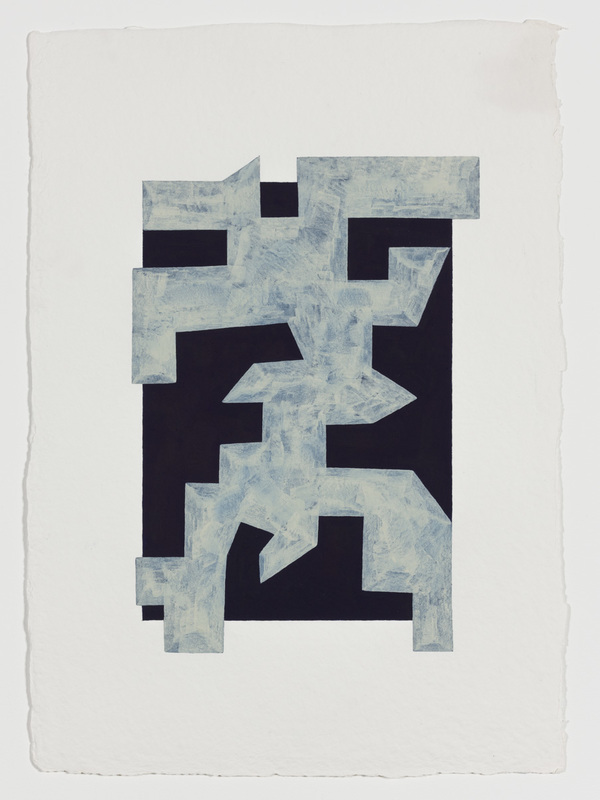
Site A, 2016, pigment, acrylic on paper, 49 x 35 cm
|
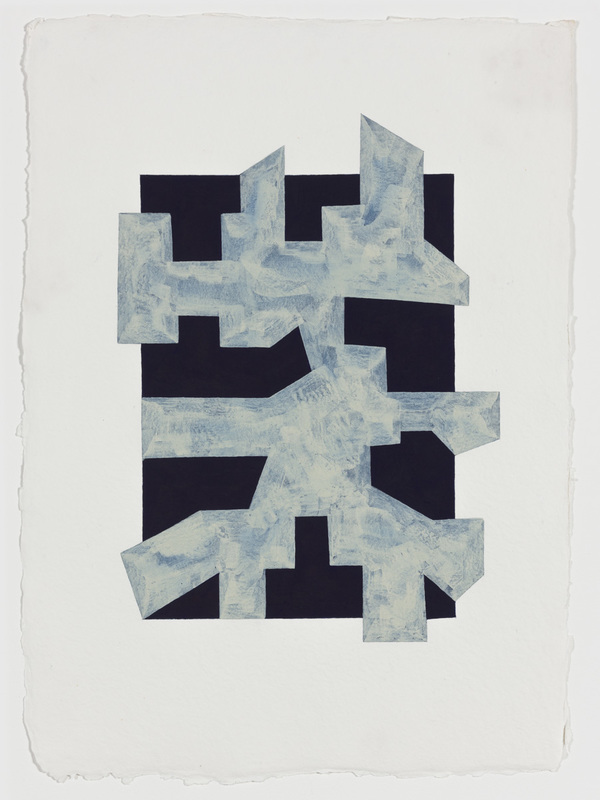
Site B, 2016, pigment, acrylic on paper, 49 x 35 cm
|
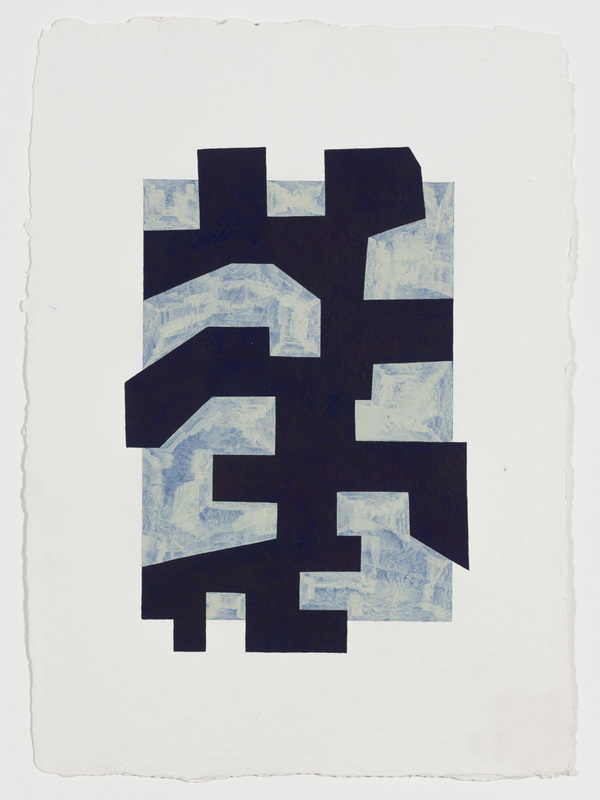
Site C, 2016, pigment, acrylic on paper, 49 x 35 cm
|
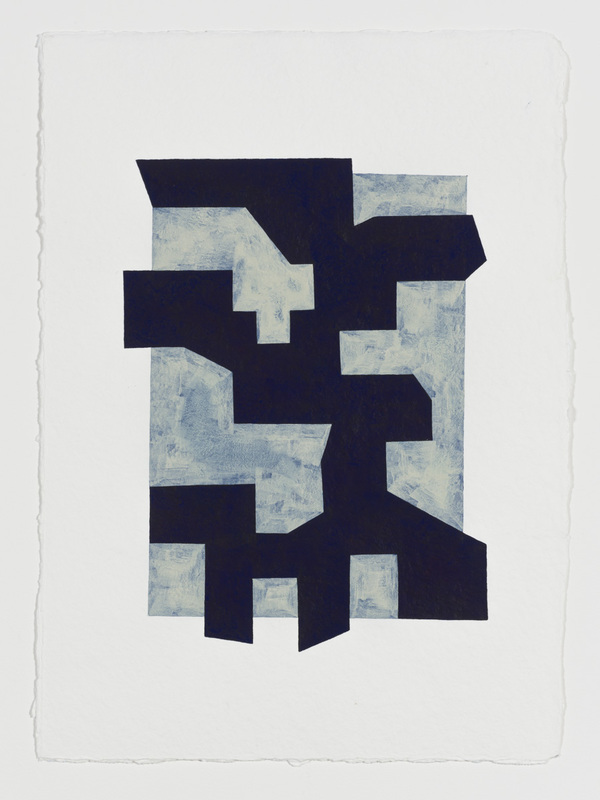
Site D, 2016, pigment, acrylic on paper, 49 x 35 cm
|
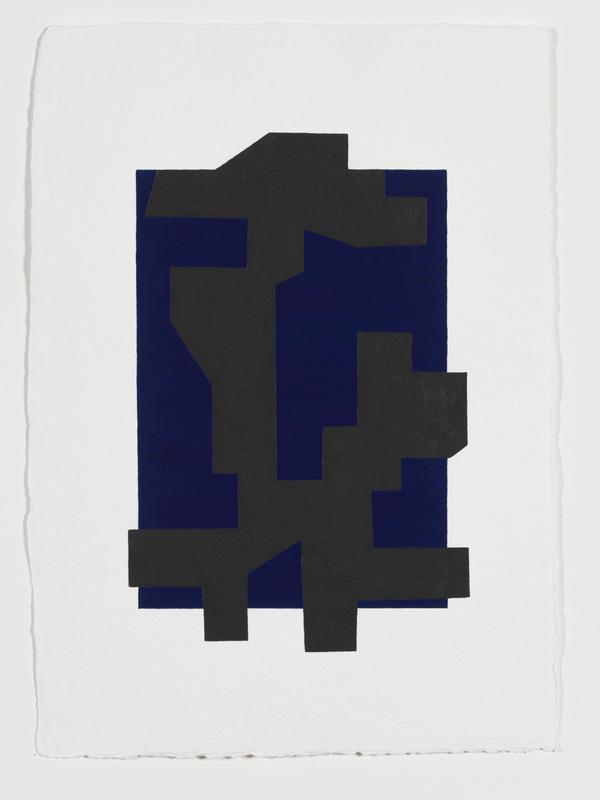
Site E, 2016, pigment, acrylic on paper, 49 x 35 cm
|
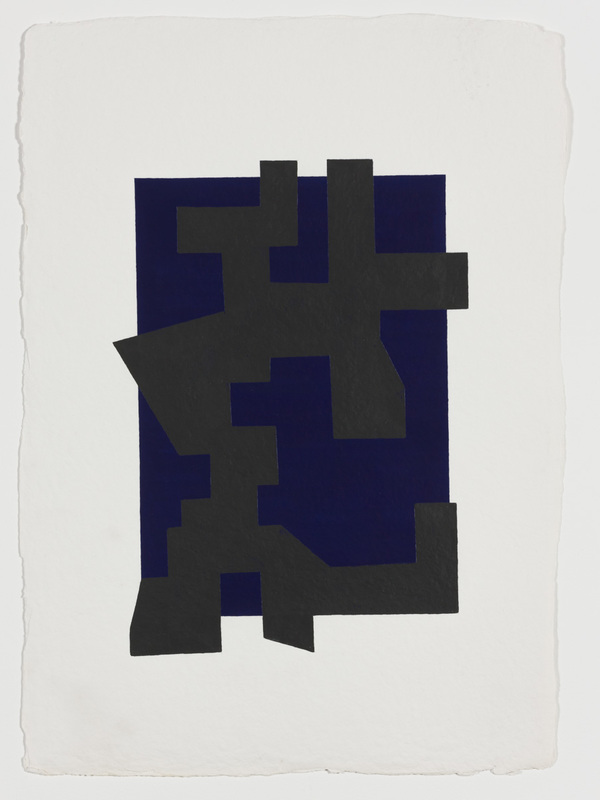
Site F, 2016, pigment, acrylic on paper, 49 x 35 cm
|
Dark: More than Black, 2014
Stephen McLaughlan Gallery, Melbourne
[ EXHIBITION LINK ]
Magda Cebokli, Andrew Christofides, Tracey Coutts, Ross Harrison, Christopher Heathcote, Kendal Heyes, PJ Hickman, Emma Langridge, Lis McDonald, Julia Ritson, Wilma Tabacco, Stephen Wickham
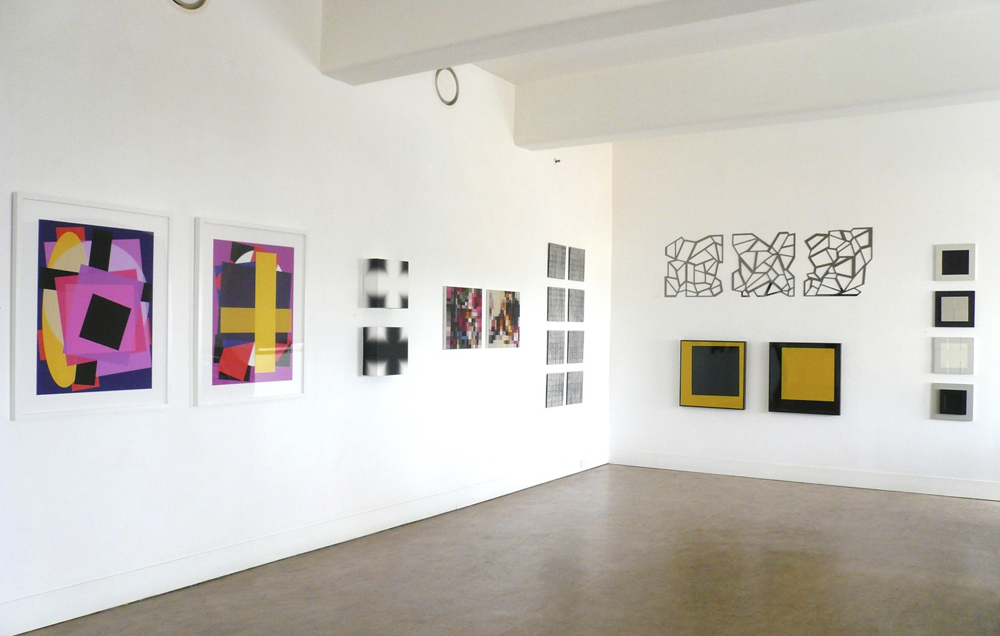
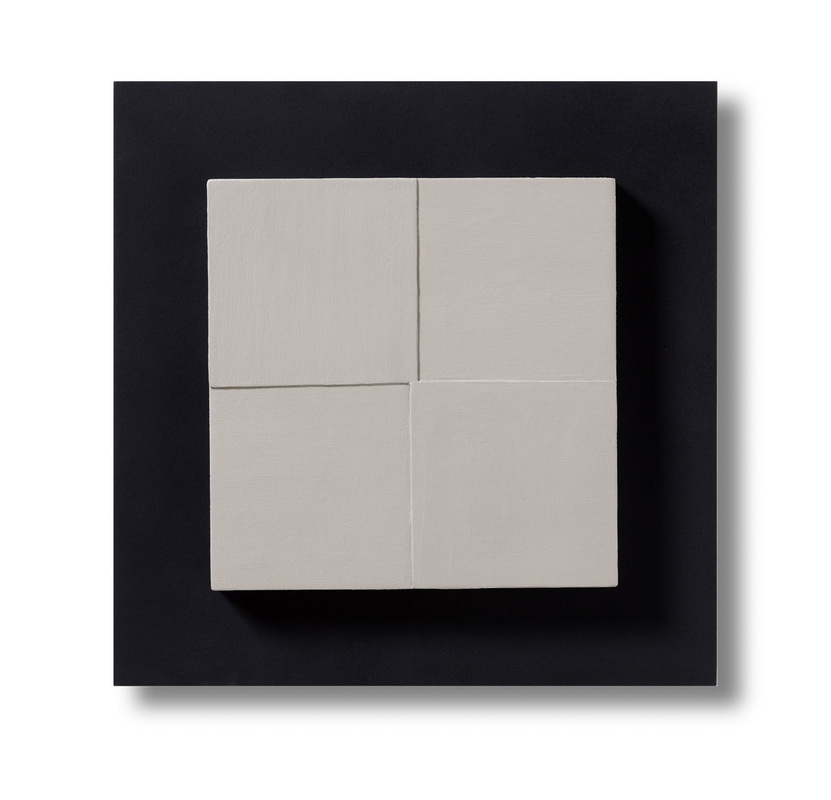
Construction #4, 2014, mixed media on wood panel, 30 x 30 cm
|
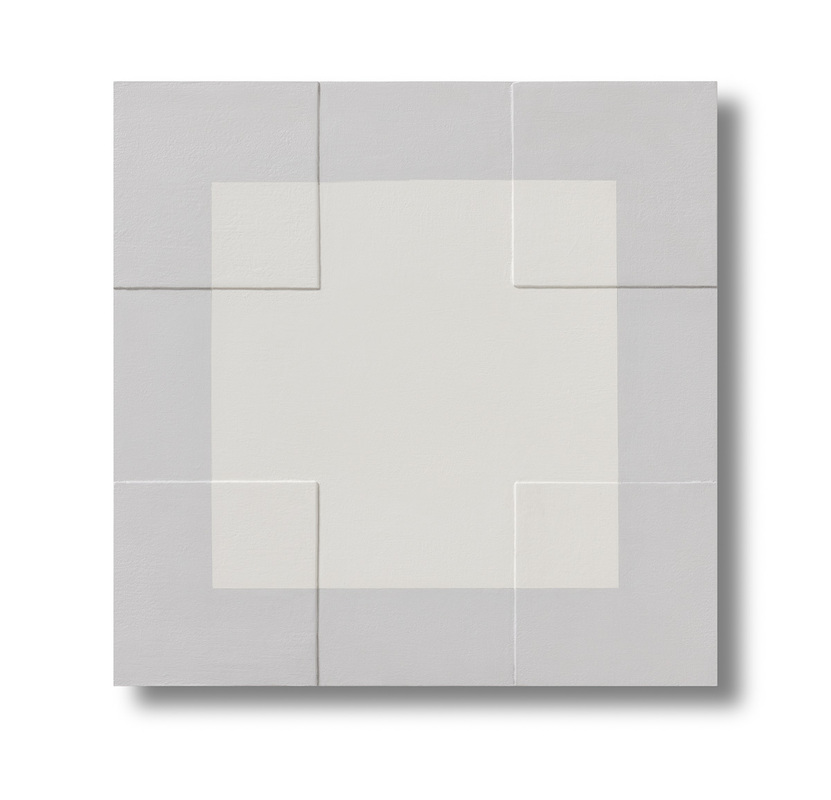
Construction #2, 2014, mixed media on wood panel, 30 x 30 cm
|
Squaring Up, 2013
Langford120, Melbourne
In these new works I have used the cyrillic alphabet letters that 'spell' Malevich as the basis for compositions intended as referents to his paintings. This year marks the 100th anniversary of his prototype drawing for the iconic painting Black Square and this exhibition commemorate his visionary ideas.
[View selection from Squaring Up Exhibition]
[View selection from Squaring Up Exhibition]
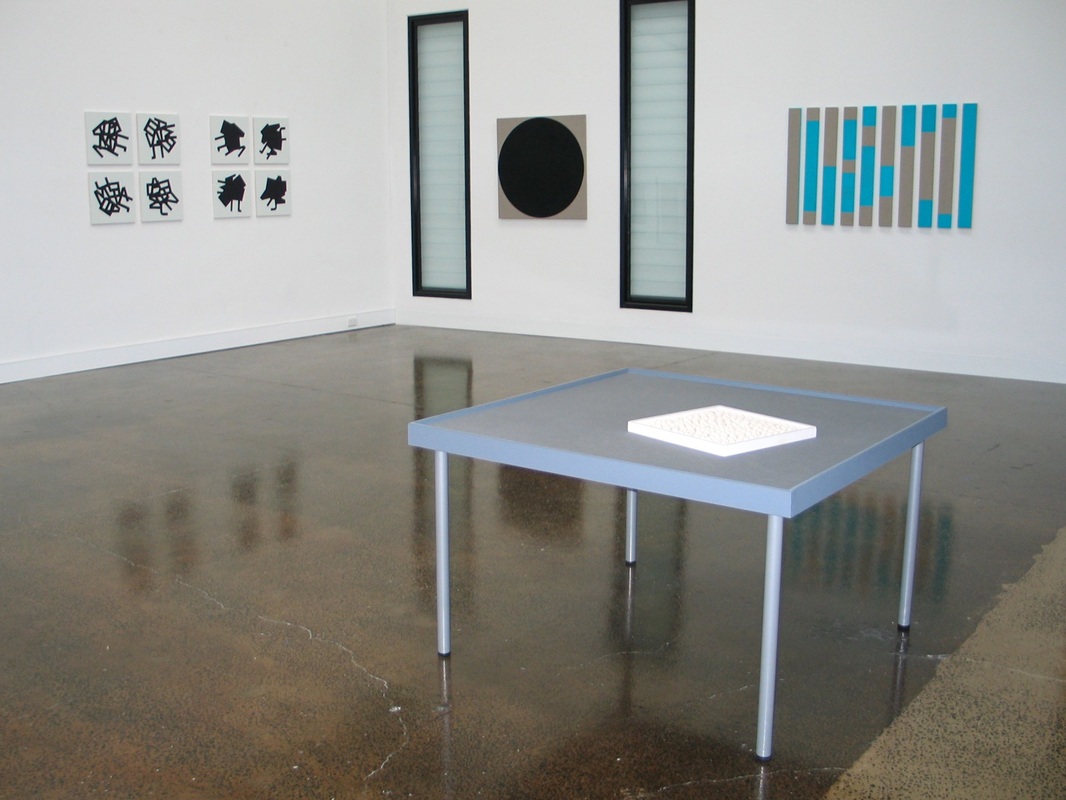
Partial exhibition view, Langford120 2013
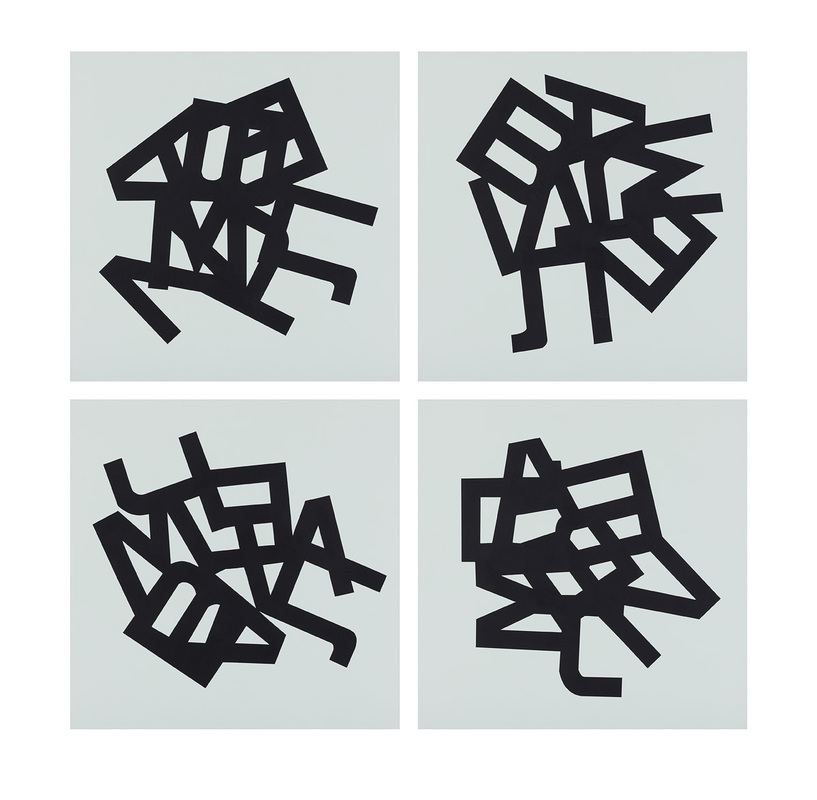
M plus 1 – 4, 2013
acrylic on wood panel, 40 x 40cm each |
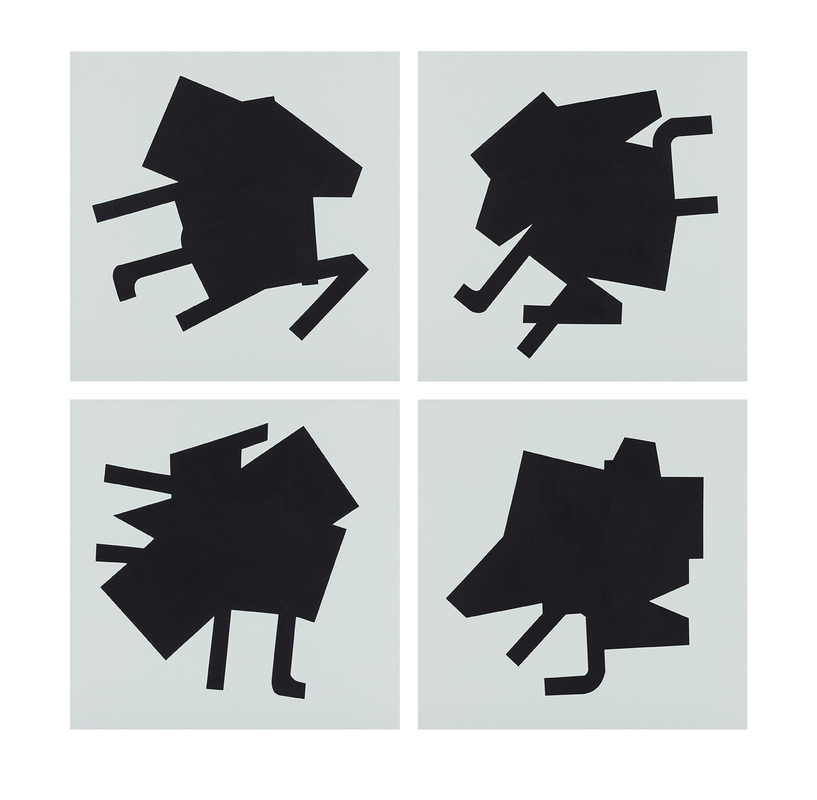
M minus 1 – 4, 2013
acrylic on wood panel, 40 x 40cm each |
Transcentric, 2008
Lethaby Gallery, Central Saint Martins College of Art and Design, London
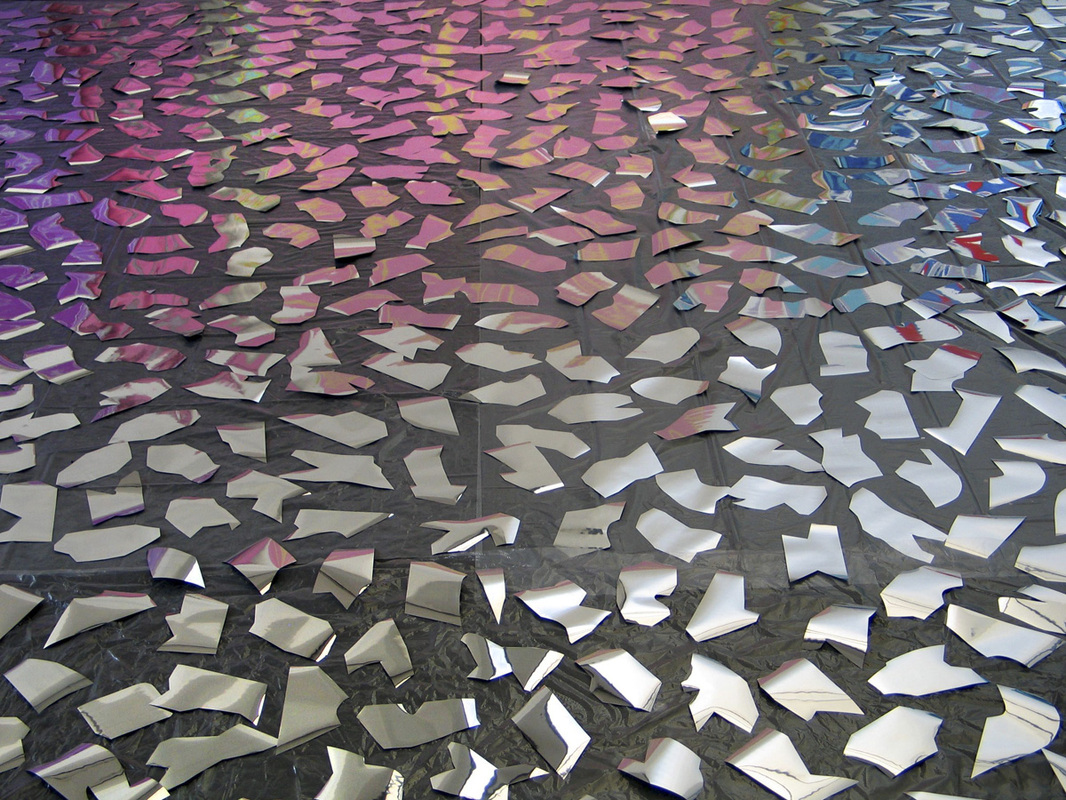
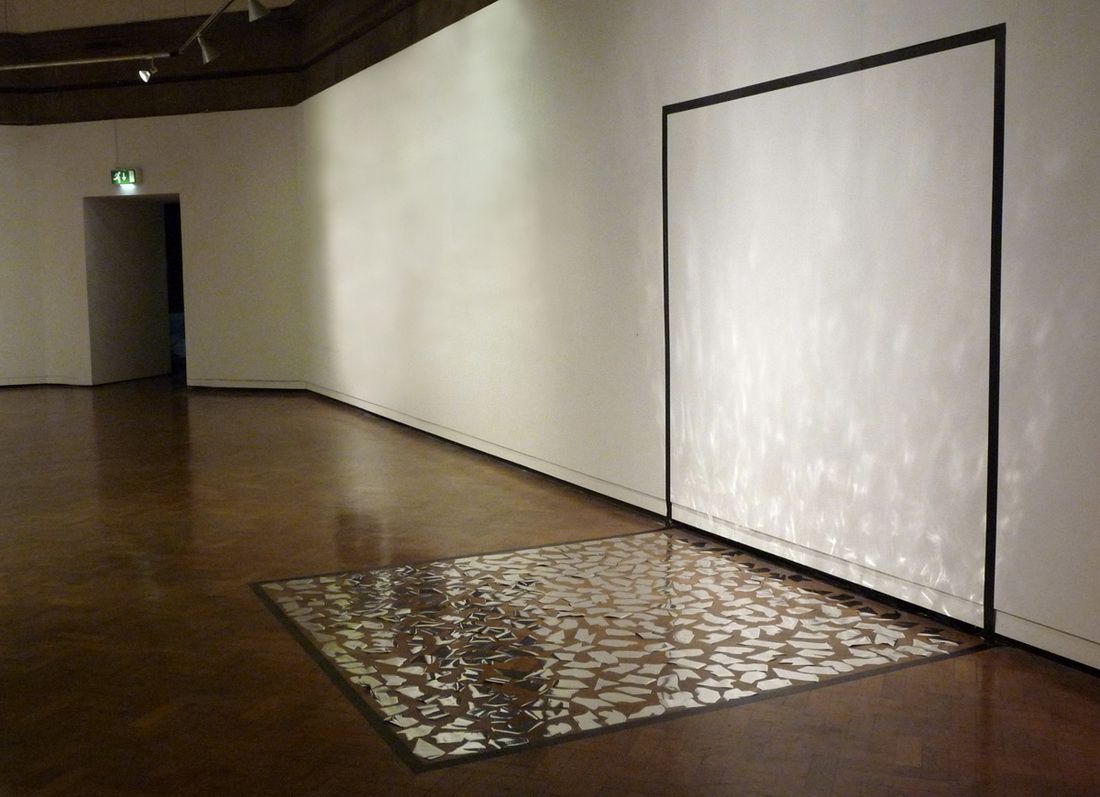
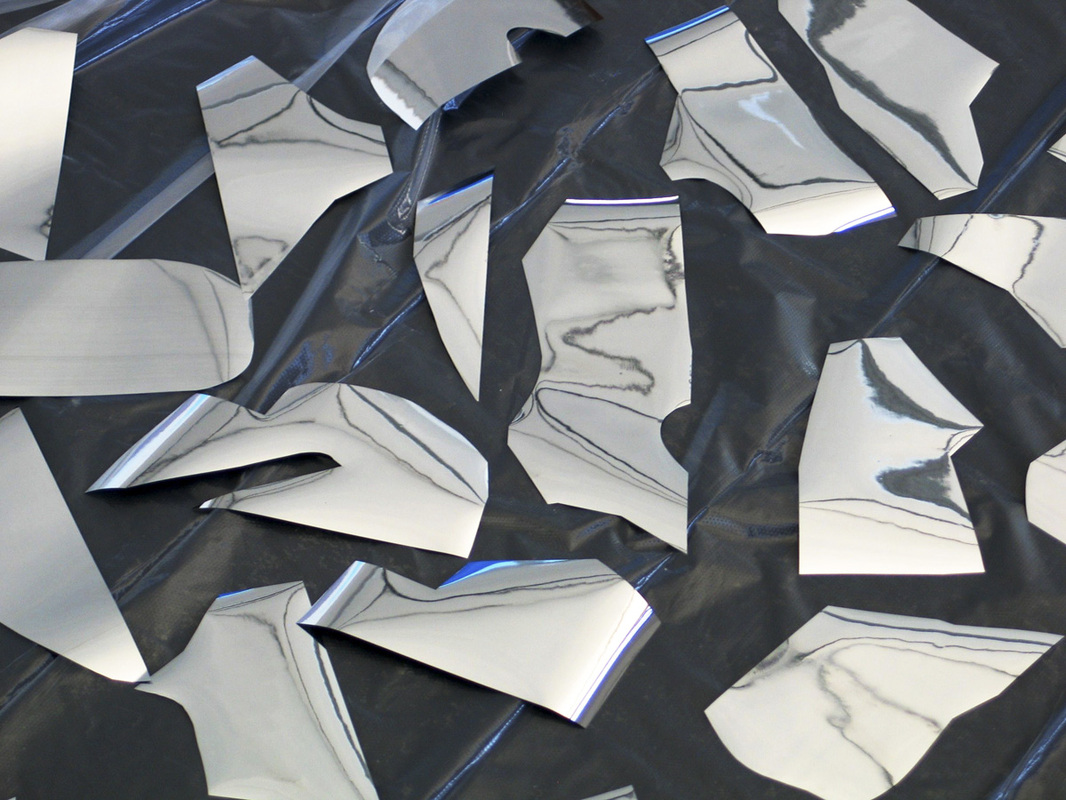
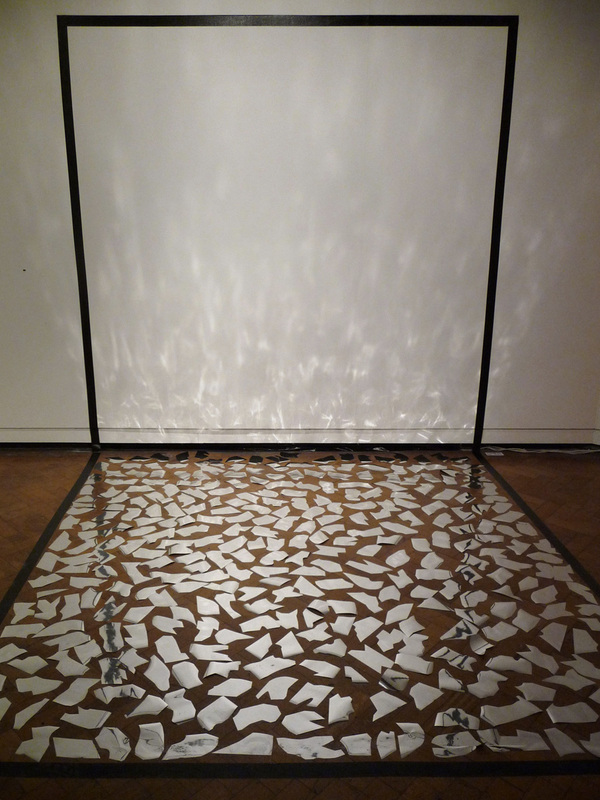
Postscript, 2008 top left and right: studio installation bottom left and right: partial installation view, Lethaby Gallery metallic ribboning and cloth tape |
|
Return Nature 2: Pastoral, 2003
Nanjing Shenghua Arts Centre, Nanjing, China, 2003
Nanjing Shenghua Arts Centre, Nanjing, China, 2003
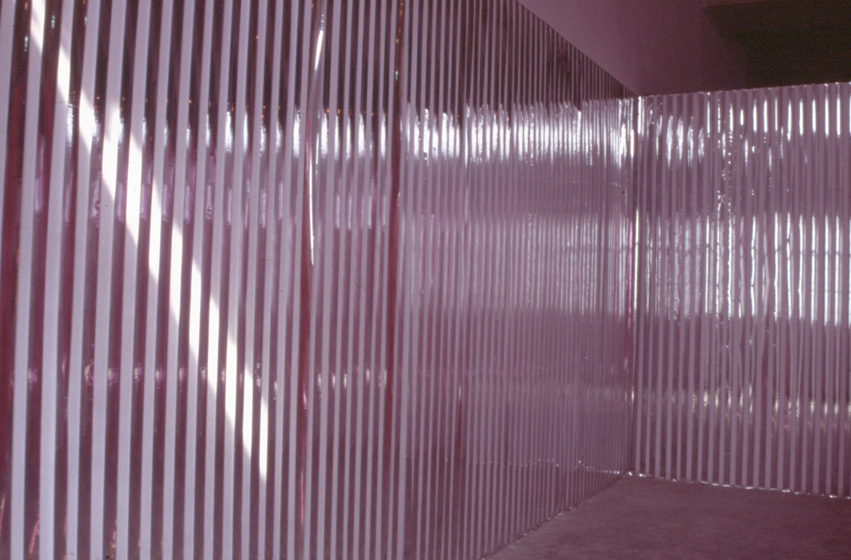
Light and Air, partial installation view, Nanjing, 2003
metallic ribboning |
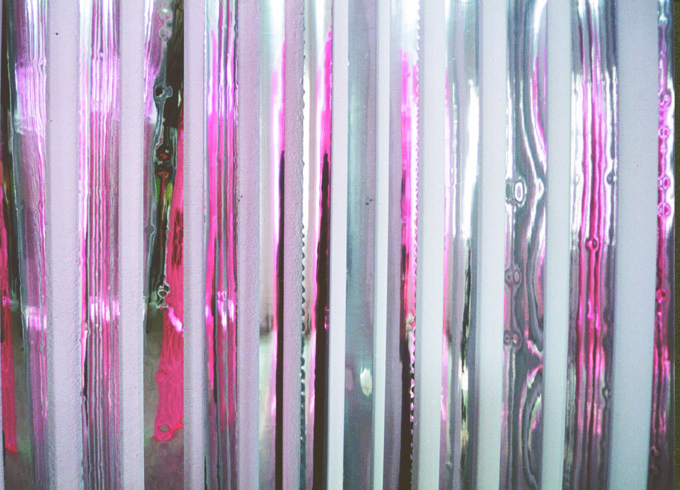
Light and Air, detail, 2003
metallic ribboning |
Painted Spaces, 2000 -2001
Australian Centre for Contemporary Art, Melbourne
New Gallery, Auckland, New Zealand
Talbot Rice Gallery, University of Edinburgh, Edinburgh, UK
Cuator: David Thomas
Australian Centre for Contemporary Art, Melbourne
New Gallery, Auckland, New Zealand
Talbot Rice Gallery, University of Edinburgh, Edinburgh, UK
Cuator: David Thomas
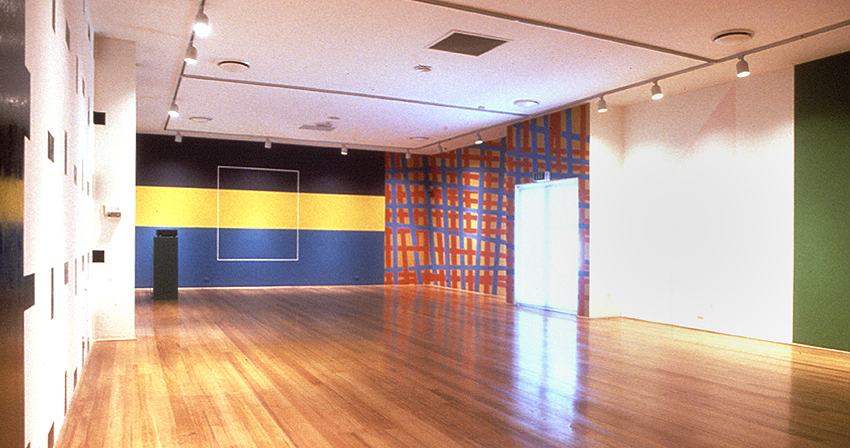
Partial installation view, Painted Spaces
ACCA, Melbourne, 2000 wall paintings |

Partial installation view, Painted Spaces, Talbot Rice Gallery
Edinburgh, UK, 2001 wall paintings |